


Over 50,000 SAR missions go out each year, with a resulting 1,500 hikers reported missing.
Average response time in national parks is 3-6 hours and an average of 1.5 hours to return with the victim.
In their most recently available spending report, the National Parks Service spent over $3.3 million on search and rescue alone.

People get lost all the time.
PROJECT BACKGROUND
RANGER INTERVIEWS
To gain insight into the current processes and challenges that come with searching for missing hikers, my team spoke with a few national park rangers from across the country.
Below are the key insights we took from each conversation.

USER 01: MARK, PARK RANGER
Mark works for Cincinnati SAR. Him and his team utilize cellular information, drones, dog teams, satellite imagery, and security camera data to locate and rescue missing people.
"It's difficult to search at night, manpower is limited and people get tired."

USER 02: KOBE, RANGER PARAMEDIC
Kobe primarily works with an ambulance team around Yosemite.
He reported receiving 2-3 calls per day, with extreme situations requiring a response of up to 8 rangers and a helicopter evacuation.
"Regulations limit drone and helicopter use, dogs tend to overheat, and ground teams can only go for so long."

USER 03: JEFFREY, WEB MANAGER
Jeffrey is directly with the NPS at Yosemite, receiving and routing calls. Most cases are mundane, and heat or illness related. More often than not, his biggest roadblock is lack of information on whereabouts or awareness that someone is missing.
"Even minor rescues can be very labor intensive, occupying several rescuers for hours."

EXISTING SEARCH AND RESCUE FLOW CHART
The current process for finding lost or injured hikers is slow and intensive. Time is everything, and the increasingly limited staffing and resources in national parks struggle to keep up.
Does it look a little confusing? Tangled or jumbled? I thought so too.
PROPOSED SYSTEM
Our solution for these issues, and under these constraints, was to design a system of robots that can make up for the loss of ranger manpower. One ranger can now cover the ground of three or four rangers, in half the time.
My two other teammates each designed a robot dog, while I did the systems thinking and designed the tablet.


Hover over image for more information.
DJI BRAND EXPLANATION
While the dogs themselves were branded with Teledyne Flir, it made sense to bring in DJI for their consumer electronics expertise. Both brands had visual languages that worked in harmony with the other, as well.
DJI's products are angular and choose to remain sharp and outdoorsy, relying heavily on heavy chamfers and long, flat surfaces.
.png)
OOPS, ALL ANALOG SKETCHES
The sketch process for this project relied heavily on communication with our park rangers for feedback and direction. They had many suggestions, and for a good portion of the development were heavily invested in a wearable wrist-mounted option.
Presented here are some of the significant concepts.

ROUND ONE

ROUND TWO

ROUND THREE
After a few rounds of sketching, I had begun developing CAD models in plasticity. The last few sketches I did were influenced by the surfacing and forms that emerged during that process.
DESIGN VALIDATION
It was important, for this project, to gather feedback on flows and feasibility of the system. Given that this was a group studio project, I had plenty of support within my team and amongst my peers.

(top) classmate testing out ux/ui flows on an early prototype
(bottom) midterm concept presentation to peers and industry professionals

The RANGER-1 Tablet
The powerhouse of the Hound SAR system, the Ranger-1 tablet coordinates the movements of the drones and aggregates the collected radar data. When every second counts, make sure you have the best equipment for the job.

BRANDING + REGULATORY
Bright orange CMF change on power button. Warning labels and dfm information adhered to the backplate, inset for protection. Embossed DJI logo.

FRONT PANEL
360 degree of capture microphone inset into screen plating. Milled out speaker grill. Applied RANGER-1 nameplate on front paneling. Clean sans-serif font, all caps.
LAYERED CONSTRUCTION
As shown in the exploded views (right), this tablet utilizes "screws not glues." a sustainable product design strategy. This gambit also contributes to the products durable appearance, further purporting strength and resilience.
The top image shows the breakdown of the LCD screen and protective frontplate.
The below image expands the back clip construction. The angled clip rests neatly in grooves cut into the sturdy bent-steel plate which anchors onto the molded plastic backpiece.


CONTEXT GALLERY
Scale reference and marketing / promotional renderings for the Search and Rescue Tablet.

FIRST RESPONDER (DEBRIS REMOVAL)

"COMMAND CENTER", MILWAUKEE
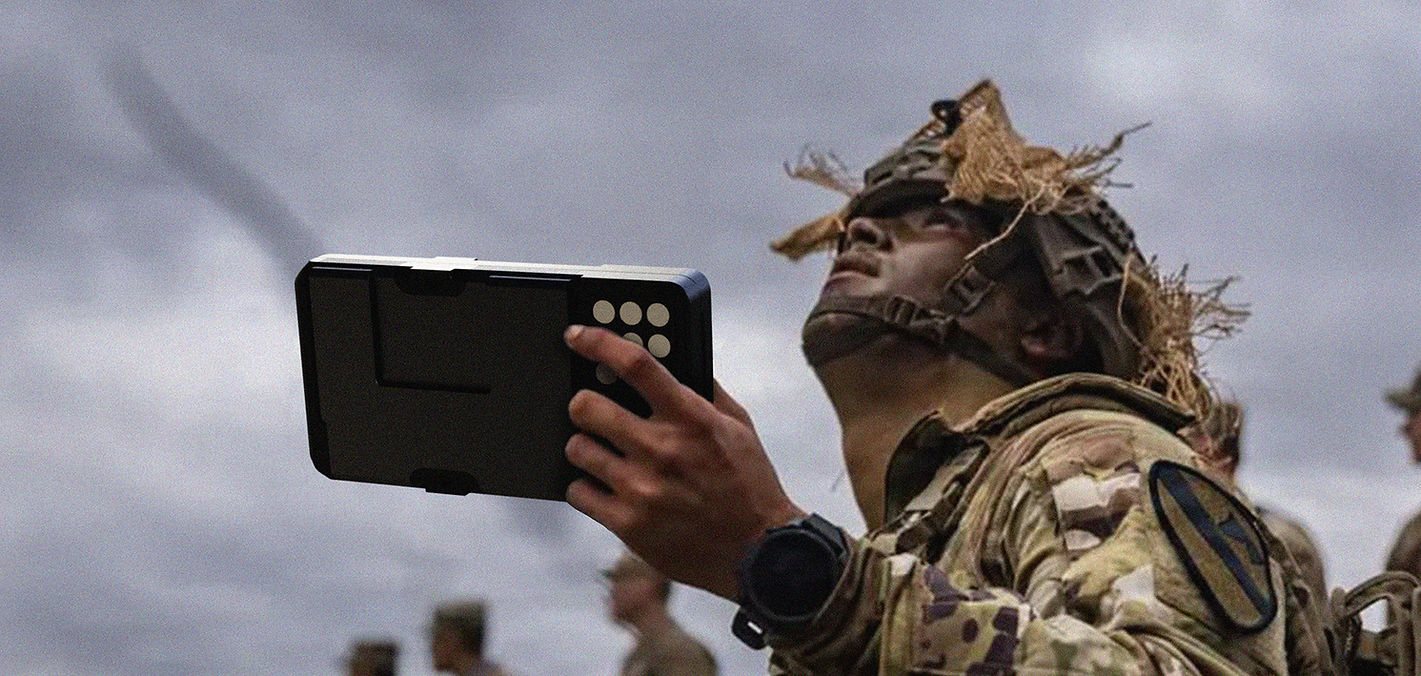
"AIR RESPONSE", WHITE SANDS NTNL PARK